Why This Chip Is Making Headlines
New AI chips make headlines when they promise more than a routine speed increase. The attention usually comes from a specific pressure point: models are becoming larger, more expensive to run, and harder to power efficiently. A processor that can handle more calculations while using less energy could affect everything from data-center costs to the responsiveness of AI tools.
That does not automatically make every performance claim meaningful. Results may depend on carefully selected benchmarks, software support, memory capacity, and the systems surrounding the chip. The important question is not whether it is faster in a laboratory test, but whether it improves the parts of AI workloads that currently limit adoption. Its significance therefore rests on what changes in practice, not just on headline specifications.
What the New Chip Actually Changes
The most important change is usually not a higher peak speed, but a better balance between computing power, memory, and energy use. An AI processor may perform more operations in parallel, move data between memory and processing units more efficiently, or support lower-precision calculations that reduce the work required for each response. These changes can help a model generate answers faster, process more requests at once, or run on fewer servers. For businesses, that could lower operating costs; for users, it could mean shorter waits and more responsive AI features.
The practical effect depends on the workload. A chip designed for training large models may be less useful for running everyday applications, while hardware optimized for inference may not accelerate model development. Software also matters: frameworks must be adapted to use the processor’s architecture, and existing systems may require costly upgrades. The chip changes the economics and scale of certain AI tasks, but it does not remove the need for suitable models, data, storage, or reliable infrastructure.
The AI Bottleneck It Helps Address
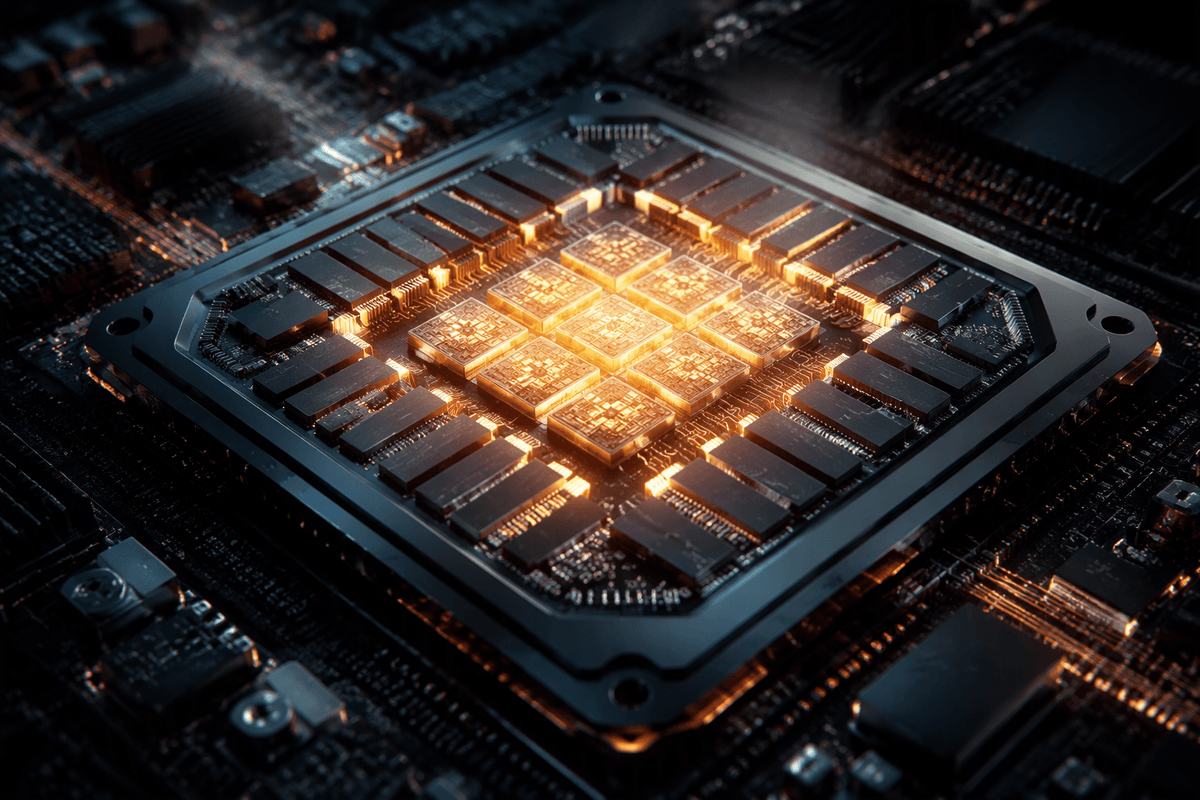
For many AI systems, the main bottleneck is not the ability to perform calculations but the effort required to move data. Large models repeatedly transfer weights and intermediate results between processing units and memory. That movement consumes time and energy, especially when a system must serve many users simultaneously. A chip that keeps more data close to its computing cores, or moves it with less overhead, can improve response times without simply adding more raw processing power.
This matters most in workloads where latency and operating cost are tightly linked. Real-time assistants, recommendation systems, image analysis, and automated business tools may need to deliver thousands of responses while maintaining predictable performance. Better efficiency could allow providers to handle the same demand with fewer servers, or support larger models within an existing power budget. The gains will vary by application. If a workload is limited by network delays, storage access, or poorly optimized software, the chip may leave its biggest potential advantage unused.
How It Compares With Existing Hardware
Compared with conventional CPUs, the new chip is likely to deliver a much larger advantage on highly parallel AI workloads. CPUs remain flexible and useful for coordinating software, handling business logic, and running smaller models, but they are not designed to perform thousands of similar calculations simultaneously. GPUs offer stronger AI performance and a mature software ecosystem, yet they can require substantial power and expensive supporting infrastructure. The new processor’s case rests on improving efficiency, memory access, or specialized AI operations rather than replacing every other type of hardware.
Its position against existing AI accelerators is more complicated. A competing GPU may still win on peak performance, model compatibility, or availability, while a specialized chip may perform better on a narrower task such as inference or real-time processing. Actual results will depend on batch size, model architecture, precision settings, and software optimization. Businesses must also consider migration costs, developer support, supply, and whether the chip works with their current servers. A strong benchmark result is useful evidence, but it is not proof of a lower total cost or better user experience across every workload.
Where New AI Applications Could Appear
The clearest opportunities may appear where AI must respond quickly, operate continuously, or process sensitive data close to where it is generated. Hospitals could use faster local image analysis, factories could detect equipment problems before a shutdown, and retailers could adjust inventory or recommendations with less delay. In consumer products, more efficient hardware could support richer voice assistants, translation, video editing, and personalized features on phones, cars, or home devices without sending every request to a distant data center.
Businesses may also use the chip to make larger models practical in places where cost or power has limited deployment. Smaller companies could run useful AI services on fewer servers, while large providers could offer more capable tools at similar operating costs. The new hardware does not create demand by itself. Applications still need reliable data, clear privacy controls, and software designed for the processor. In some cases, cloud infrastructure or existing GPUs may remain cheaper because they are easier to rent, integrate, and scale. The strongest early uses are therefore likely to be targeted systems with measurable response-time or energy requirements, not every application labeled “AI.”
What Could Limit Its Real-World Impact

A promising chip can still have limited impact if the surrounding system is not ready for it. Companies may need new servers, cooling equipment, testing processes, and software tools before they see any benefit. Developers must also learn unfamiliar programming interfaces and adapt models to the chip’s supported formats. Those changes take time, and they can outweigh energy savings during the early stages of deployment.
Established GPUs and cloud platforms are attractive because businesses can obtain them, hire people with relevant experience, and expand capacity gradually. A newer processor may offer better efficiency but have limited supply, fewer compatible applications, or uncertain long-term support. Performance can also decline when models are updated, workloads become less predictable, or requests cannot be processed in large batches. These factors make a chip’s total cost harder to judge than its advertised speed.
Its impact may therefore arrive unevenly. Specialized data centers or high-volume services could benefit first, while smaller organizations wait for simpler tools and broader access. The chip can improve AI economics, but adoption will depend on integration costs, reliability, software maturity, and a clear business case.
What This Means For AI’s Next Phase
The next phase of AI will likely be shaped less by a single breakthrough chip than by a broader shift toward specialized, efficient computing. If this processor performs well outside controlled benchmarks, it could make larger models easier to run in real time and encourage more AI features to move from centralized data centers onto local devices. That would expand access while reducing delays and, in some cases, the amount of sensitive information sent to the cloud.
Its influence will still depend on economics and execution. Hardware must be available, supported by dependable software, and efficient enough to justify replacing systems that already work. The practical lesson is to judge the chip by sustained cost, reliability, and useful applications—not peak speed alone. It may not transform AI overnight, but it could help make advanced systems cheaper, faster, and more widely deployable.