Why Neural Networks Matter for Mathematics
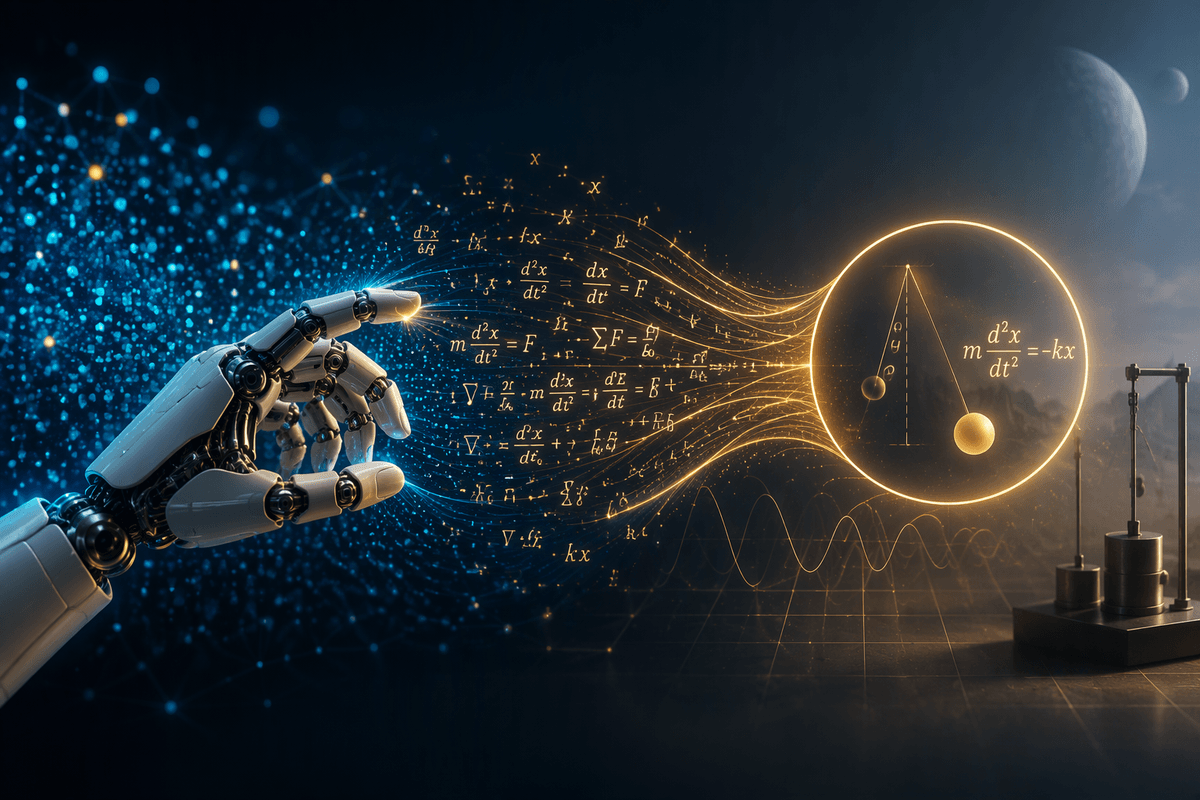
When a mathematical problem takes hours to solve, the difficulty may not come from one complicated calculation. It may come from searching through millions of possible cases, spotting a hidden pattern, or deciding which approach is worth trying. Neural networks matter because they can learn useful relationships from examples and use them to guide that search.
This does not make them replacements for equations, proofs, or mathematical judgment. A neural network usually produces a prediction, approximation, or promising direction rather than a guaranteed explanation. It can identify patterns in large datasets, estimate difficult quantities, suggest conjectures, and help researchers focus their attention. Understanding that distinction is essential. The strongest claims about AI in mathematics concern cooperation between learned pattern recognition and methods that can verify results exactly.
From Calculations to Learned Mathematical Patterns
A calculator follows instructions that a person or program has already specified. A neural network works differently: it adjusts many internal parameters while studying examples, then uses the resulting pattern to make predictions about new cases. For instance, after seeing solutions to many equations, it might learn which features often signal a useful substitution or estimate the behavior of a function at points that were not included in its training data.
The important shift is from executing a known procedure to recognizing regularities that can support a procedure. This is useful when the exact calculation is expensive, repeated many times, or based on incomplete information. A model might approximate a complex physical simulation, rank possible mathematical conjectures, or identify likely relationships in a large table of numbers. Yet learning patterns has a cost: performance depends heavily on the examples, and familiar-looking inputs can still produce unreliable answers when they differ from the training data. The network may also detect a correlation without revealing why it holds, so its output remains a starting point for mathematical analysis rather than a finished result.
Where Neural Networks Already Help
One established use is accelerating repeated numerical work. Neural networks can approximate solutions to differential equations, physical simulations, or optimization problems when producing an exact solution each time would be too slow. Once trained, a model may generate estimates quickly, which is valuable in engineering, climate modeling, and financial analysis. The trade-off is that speed usually comes with approximation error, so the model must be tested against trusted calculations.
Neural networks also help mathematicians search. They can examine large collections of equations, graphs, or algebraic objects and identify examples that resemble known patterns. In some research settings, this helps suggest conjectures, find counterexamples, or select promising steps in a proof. Other systems assist with symbolic calculation by predicting which transformation or lemma might simplify a problem. These applications do not eliminate traditional methods. They reduce the time spent scanning possibilities and direct human attention toward cases that deserve closer inspection. Their usefulness is greatest when the search space is large, the goals are clear, and an independent method can check the resulting claim.
When Prediction Is Not the Same as Proof
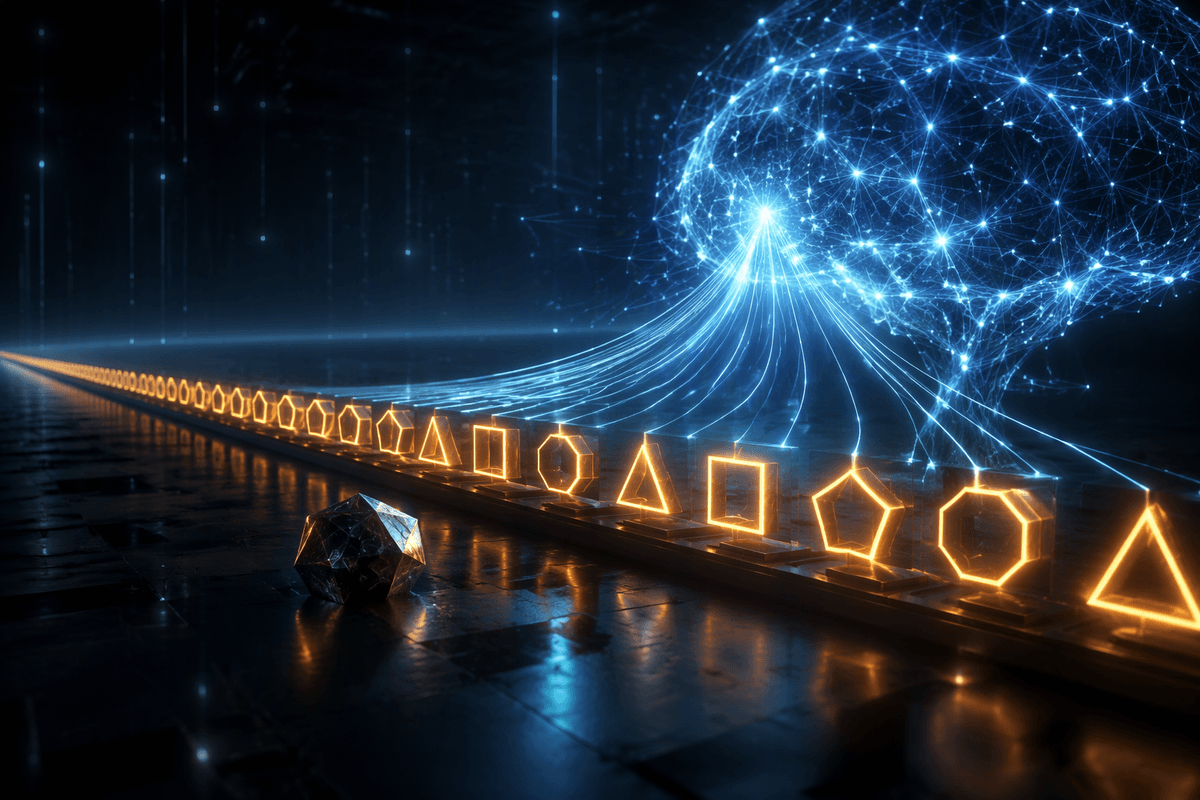
A model can produce the correct answer for thousands of examples and still fail to establish a mathematical theorem. Its output is usually based on statistical regularities, not a chain of statements that must hold in every allowed case. A predicted pattern may suggest that a sequence continues in a certain way, but one overlooked exception can invalidate the general claim. Even high accuracy does not remove that risk, especially when the model encounters inputs unlike those in its training data.
Proof requires a different standard. Each step must follow from definitions, established results, or explicit assumptions, and another mathematician must be able to inspect the reasoning. Neural networks can support this process by proposing lemmas, choosing useful examples, or identifying likely proof strategies. They can also help formal systems search through possible arguments. However, a plausible explanation is not enough, and confident language is not evidence of validity. Checking may require symbolic algebra, a proof assistant, numerical bounds, or a human review of hidden assumptions. The practical challenge is that verification can take nearly as much expertise as solving the original problem, particularly when the model’s suggestion is difficult to interpret.
Combining Learning With Traditional Mathematics
Productive workflows treat neural networks as guides within a broader mathematical process. Researchers might use a model to rank conjectures, suggest substitutions, or estimate which examples are most likely to reveal a useful pattern. Traditional algorithms can test those suggestions, symbolic tools can simplify expressions, and proof assistants can verify each logical step. Such a division of labor takes advantage of neural networks’ speed and flexibility without expecting them to provide certainty they cannot guarantee.
The same approach extends to numerical work. Neural networks can produce fast approximations, while established equations, error bounds, or simulations provide ways to measure their deviation from the true value. Excessive error may call for retraining with better examples or restricting the model to a narrower range of inputs. Those safeguards require additional time, technical work, and computing resources, and they still leave room for failure. Even so, combining learned suggestions with exact mathematical checks offers a more robust workflow than relying on either method alone. Neural networks broaden the search, while established mathematics determines which results hold up.
The Limits Behind the Excitement
A network may appear impressive in a demonstration because the problem has been carefully selected, the data are clean, and success is measured on cases similar to those used during training. Real mathematical work is less controlled. Definitions may be ambiguous, examples may be scarce, and the most important cases may be precisely the unusual ones. A model can also reproduce errors or biases in its data, making a familiar method look reliable even when it fails at the boundary of its intended use.
Training large models requires substantial computing resources, and preparing high-quality mathematical examples can demand expert labor. Interpretability remains difficult: knowing that a model favors one conjecture or proof step does not necessarily explain its choice. Reproducibility can also suffer when results depend on private datasets, changing software, or undocumented settings. These constraints do not make neural networks unhelpful, but they narrow the claims that should be made. A convincing result should include clear benchmarks, tests on unfamiliar problems, estimates of error, and an independent route to verification. Without those checks, a striking prediction is evidence of usefulness, not evidence of a mathematical breakthrough.
What Mathematical Problem-Solving May Become
The realistic future is not one in which neural networks replace mathematicians, but one in which mathematical work becomes more collaborative between people, learned models, and formal tools. A researcher may ask a model to search a large space of possible ideas, use software to test promising cases, and then turn the strongest candidate into a proof that a proof assistant can verify. This could make difficult problems more approachable without lowering the standard of evidence.
The main skill will be judging where a model’s contribution is useful and where it is unsafe to trust. Students and professionals will need to read mathematical arguments, assess uncertainty, design meaningful tests, and recognize when an apparent pattern lacks justification. Claims of an AI breakthrough should therefore be evaluated by asking what was discovered, what was independently verified, and how well the method handles unfamiliar problems. The future of mathematical problem-solving is likely to reward that combination of speed, skepticism, and proof.