Why Matrix Multiplication Still Matters
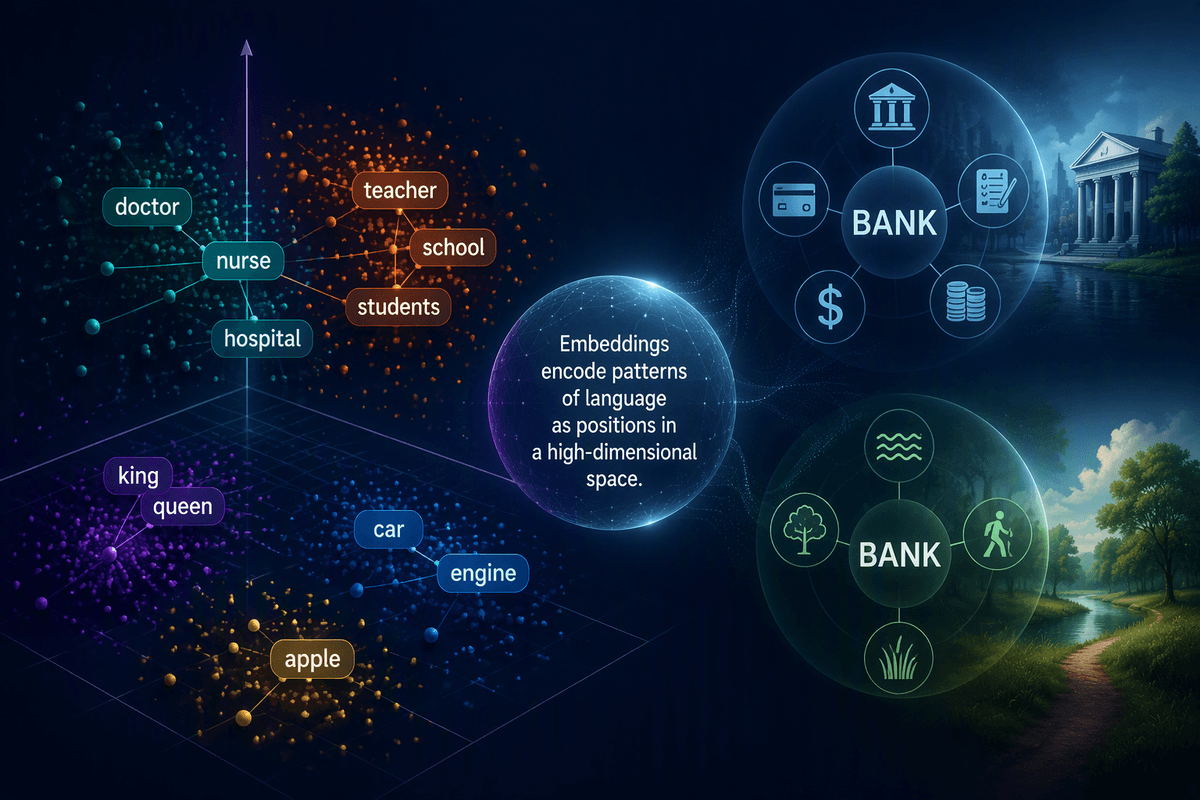
When a recommendation system suggests a film, a phone recognizes your face, or a language model predicts the next word, large arrays of numbers are being combined behind the scenes. Matrix multiplication is one of the main operations that performs this work. It links inputs to patterns, transforms data between layers, and helps neural networks turn calculations into predictions.
That makes even a small improvement meaningful when the same operation is repeated billions of times. Faster multiplication could reduce the computing power, time, or energy required to train and run AI systems. It could also help scientific simulations, search engines, graphics, and engineering tools. A new mathematical method must work reliably on real hardware and useful problem sizes; an elegant speedup on paper may not translate into practical gains.
The Long Search for Faster Algorithms
The search for faster matrix multiplication has lasted for decades because the obvious method scales poorly. Multiplying two square matrices with side length n in the standard way requires roughly n3 basic operations. Double the matrix size, and the work grows by about eight times. That becomes expensive when the matrices represent millions of data points or are processed repeatedly.
Researchers have looked for ways to reduce that burden without changing the answer. In 1969, Volker Strassen showed that seven smaller multiplications could replace the usual eight in a particular recursive method, lowering the theoretical growth rate. Later advances improved the mathematical bound further, but they often involved complicated procedures, large constant costs, or problem sizes too big for ordinary software to benefit. This created a persistent gap between proving that an algorithm is faster asymptotically and making it faster in practice. AI-assisted research matters because it may explore unusual combinations of operations that human researchers would overlook, while still leaving engineers to test whether those discoveries are efficient, stable, and usable.
How AI Searches Mathematical Possibilities
Instead of asking an AI system to invent a complete algorithm from scratch, researchers can frame matrix multiplication as a search problem. The system is given a target computation and a set of allowed operations, then tests many possible sequences for combining and reusing intermediate results. A useful candidate must produce exactly the same answer as the conventional method, not merely an approximation. Techniques from reinforcement learning can reward correct solutions that use fewer operations, guiding the search toward increasingly efficient arrangements.
This approach is valuable because matrix multiplication can be represented in many mathematically equivalent ways, most of which are difficult to discover by inspection. An AI system can examine vast numbers of possibilities and identify patterns that suggest a new proof or algorithm for human researchers to study. However, finding a compact solution is only the first step. The result still needs mathematical verification, translation into software, and testing on actual processors, where memory movement, parallelism, and hardware design may matter as much as the operation count.
What These Discoveries Actually Improve
The clearest benefit is not that every computer suddenly performs matrix multiplication faster. It is that researchers gain new ways to reduce repeated work. A discovered algorithm might use fewer arithmetic operations, lower the energy needed for a calculation, or make a particular class of matrix problems easier to process. In AI systems, even a modest improvement can matter when multiplied across training runs, data centers, and millions of daily predictions. The same principle applies to simulations, image processing, recommendation engines, and scientific computing.
These gains are most useful when the algorithm matches the problem and the machine. A method designed for specially structured matrices may offer little advantage for general-purpose workloads. Extra additions, complicated memory access, or difficulty dividing tasks across processors can erase a theoretical saving. Some discoveries may therefore influence future hardware or software design before they improve today’s applications. Their broader value is still significant: they reveal which kinds of mathematical shortcuts are possible, give engineers new options, and show that AI can contribute to improvements in the foundations of computing—not just to the applications built on top of them.
Why Faster Is Not Always Better
A method that saves multiplications on paper can still lose in the real world. Modern processors do not spend all their time doing arithmetic; they also move data between memory, share work across many cores, and manage numerical precision. An algorithm with fewer calculations may require more temporary storage or irregular data movement, creating delays that outweigh its mathematical advantage. Software engineers must also account for whether the method works well on GPUs, specialized AI chips, or ordinary CPUs.
The speed can come at the cost of simplicity. A complicated algorithm may be harder to verify, maintain, or adapt to different matrix sizes. If it only helps enormous workloads, smaller systems may gain nothing while carrying extra implementation costs. For that reason, researchers judge new methods by more than their theoretical operation count. They ask how reliably the algorithm runs, how much memory it uses, whether it preserves accuracy, and where it fits into existing systems. The most valuable discovery may not be the fastest method in every case, but a new option that performs better under the right conditions.
Beyond Multiplication: AI as A Mathematical Partner

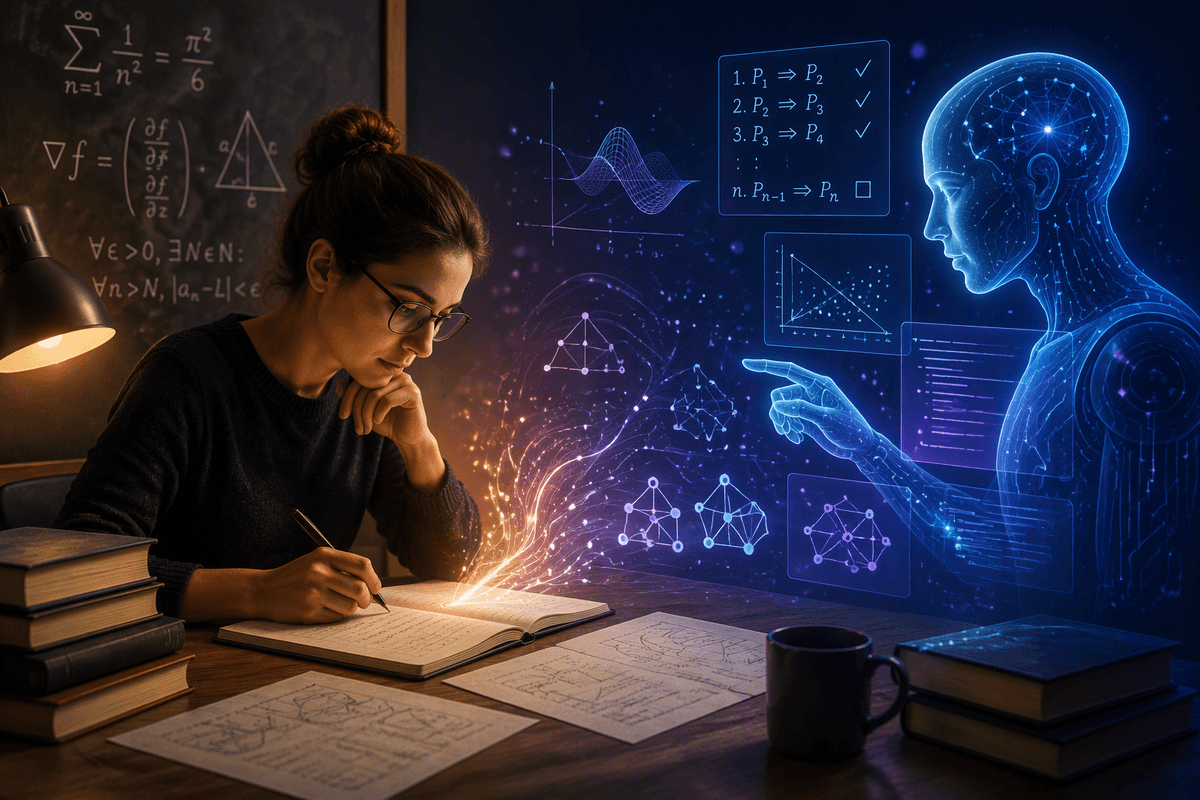
The more important shift may be the change in how mathematical research is organized. A researcher can describe a problem, define the rules a solution must follow, and let an AI system search through combinations that would be tedious to examine by hand. The researcher then checks the result, explains why it works, and decides whether it addresses a meaningful problem. AI is not replacing mathematical judgment; it is expanding the range of candidates that human experts can investigate.
This partnership could apply far beyond matrix multiplication. Similar search methods may help discover better schedules, layouts, proofs, compression techniques, or designs for specialized computer hardware. The mathematical usefulness is not measured only by novelty. A candidate must be understandable enough to verify, robust enough to implement, and valuable enough to justify the effort of adopting it. Researchers also need tools that can distinguish a genuine improvement from a solution that merely exploits a narrow test case. Used carefully, AI becomes less a calculator and more a tireless collaborator—one that proposes possibilities while people supply context, standards, and judgment.
A New Way to Think About Algorithms
For decades, algorithms were often treated as finished recipes: experts designed them, proved them, and engineers implemented them. AI-assisted discoveries suggest a more flexible model. An algorithm can become the result of an ongoing search among many valid ways to organize a computation. That does not make every machine-generated idea useful, but it changes where innovation can begin. Human researchers may spend less time testing routine combinations and more time evaluating which discoveries solve important problems.
The practical lesson is to judge algorithms as part of complete systems, not as isolated formulas. A better method must fit the hardware, preserve accuracy, and justify the cost of adoption. Matrix multiplication shows why this matters: a small improvement in a foundational operation can influence entire fields, even if most users never see the algorithm itself. AI’s lasting contribution may be this expanded search for possibilities—paired with human judgment about which ones are worth building.