Why Quantum Models Need New Assistance
Simulating a quantum system on a classical computer becomes difficult long before the underlying physics is fully understood. As the number of particles or possible states grows, the model must track an expanding set of interactions and probabilities. Memory demands rise, calculations take longer, and approximations can accumulate in ways that are difficult to detect. Even a useful simulation may require repeated runs across many parameter choices, turning a research question into a substantial computational task.
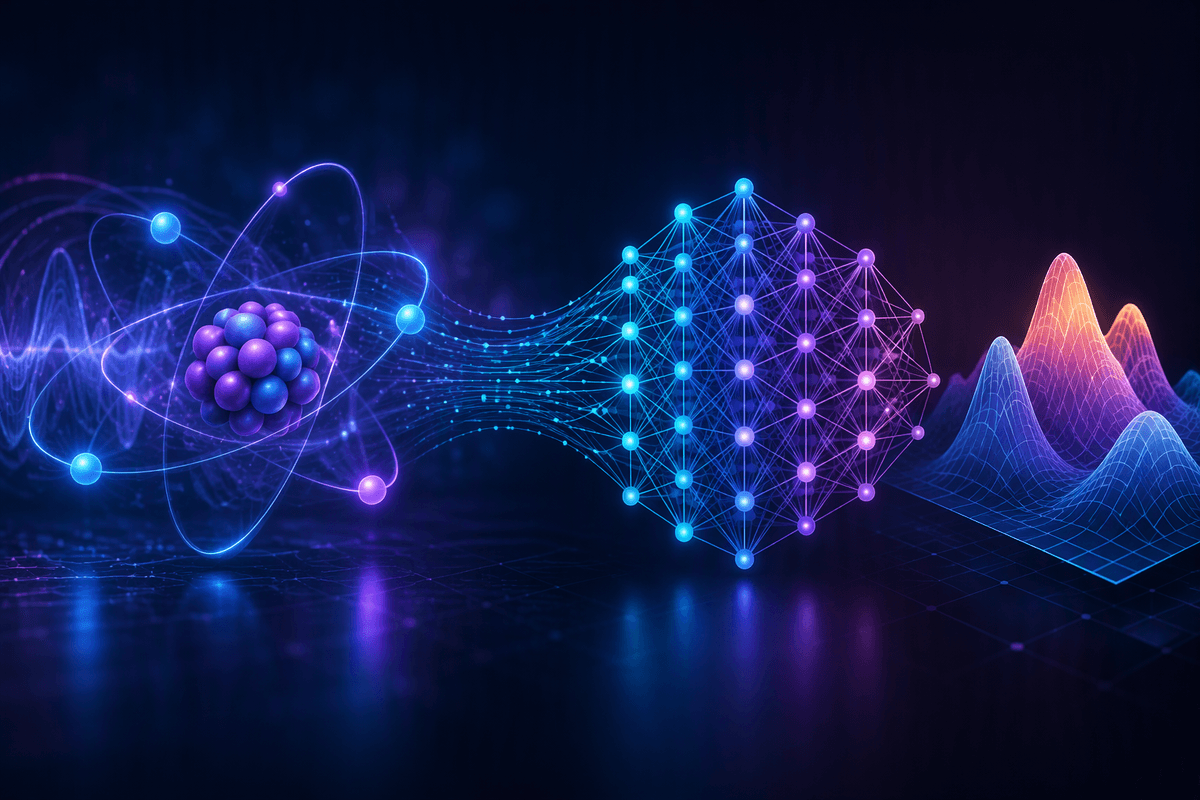
Machine learning offers assistance by learning patterns from trusted calculations, experimental data, or simplified physical models. A trained model can then estimate quantities that would otherwise require expensive simulations, or identify which cases deserve detailed treatment. This does not remove the quantum complexity, and it does not guarantee physical accuracy. Its value depends on the quality and coverage of its training data, the structure built into the model, and careful validation against methods that remain computationally demanding.
Where Classical Approaches Begin to Struggle
The pressure becomes most visible when a simulation must be repeated rather than run once. Researchers may need to scan temperatures, field strengths, material compositions, or time intervals, with each change altering the calculation. Exact methods can become impractical as the state space expands, while approximate methods often trade accuracy for manageable cost. Increasing resolution may reveal important behavior, but it can also multiply memory use and runtime. The difficulty is not simply that one calculation is slow; it is that exploring the model’s full range can be too expensive.
Classical techniques also face a precision problem. An approximation that works well in one regime may fail near a phase transition, during rapidly changing dynamics, or for strongly correlated particles. Those failures are especially troublesome when the calculation is used to guide an experiment or interpret noisy measurements. Machine learning can help by replacing repeated portions of a costly computation with a fast estimate, but the shortcut inherits the limits of its examples. If the system enters conditions absent from the training data, speed may expose an error rather than solve the underlying problem.
What Machine Learning Can Learn
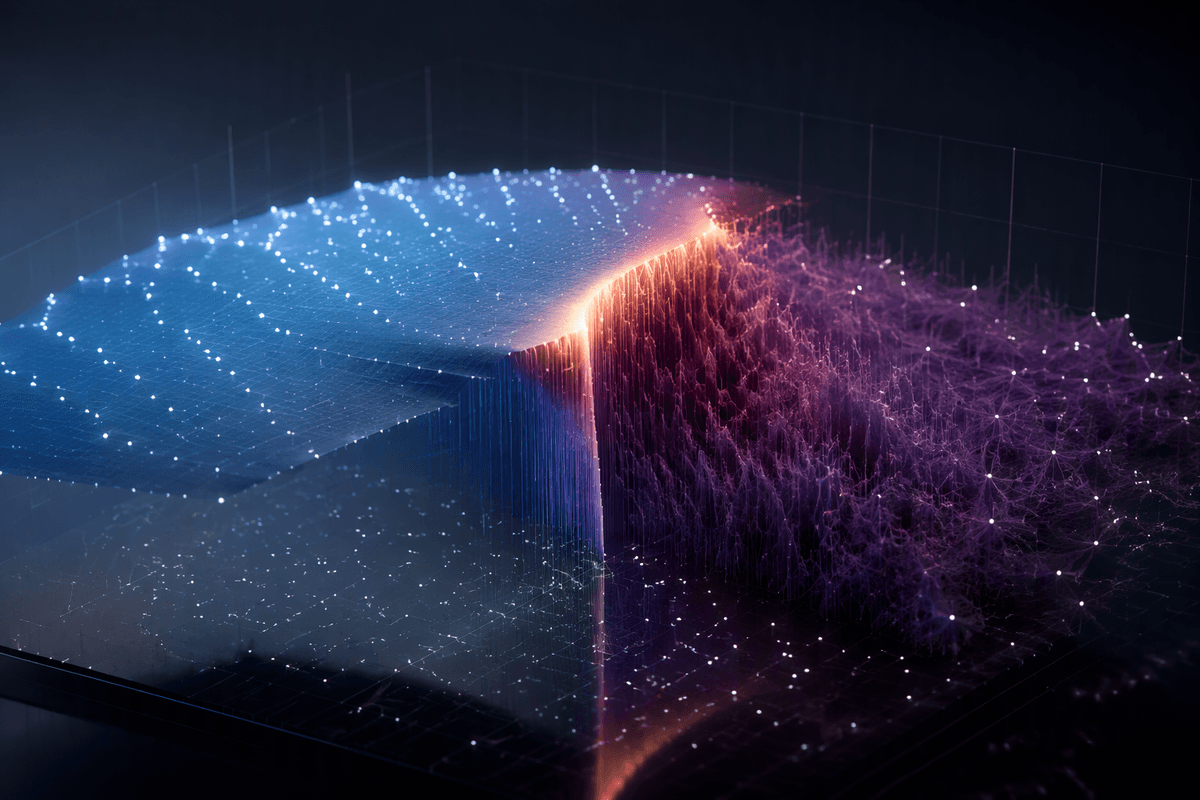
The most practical target is often a mapping between model inputs and measurable outputs. Given parameters such as temperature, interaction strength, or lattice geometry, a neural network can learn to estimate energy, magnetization, correlation functions, or other observables produced by a more expensive solver. It may also learn a compact representation of a quantum state, reducing the amount of information that must be stored or processed. In these roles, machine learning acts as a surrogate: it approximates a repeated calculation quickly enough to support broad parameter sweeps, optimization, or real-time analysis.
Learning can also guide the simulation rather than replace it. A model may identify which configurations are likely to matter, propose promising samples, or flag regions where an approximation appears unreliable. Physics-informed architectures can constrain predictions using symmetries, conservation laws, or known boundary conditions, reducing the burden on the training data. Even so, a low prediction error on familiar examples does not establish general validity. Rare states, sharp transitions, and extrapolation beyond the sampled parameter range remain difficult, and a more expressive model may require substantial training data, specialized hardware, and repeated checks against trusted calculations.
The Hybrid Workflow in Practice
A typical workflow begins with a trusted but expensive solver. Researchers generate training examples across a carefully chosen range of parameters, then train a machine-learning model to reproduce selected outputs or identify useful configurations. Once its errors are acceptable, the model handles the large exploratory phase: scanning parameter spaces, ranking candidate states, or providing rapid estimates during optimization. The original solver remains available for selected points, especially where the model predicts unusual behavior or operates near the edge of its training range.
This division of labor changes how computation is organized rather than eliminating difficult calculations. Data generation can be the main bottleneck, particularly when each example requires a high-resolution simulation or experimental measurement. Preparing consistent inputs, encoding symmetries, and deciding which observables matter also require domain expertise. A model that is fast at inference may therefore save substantial time only after a costly setup phase. The practical gain is greatest when many related predictions are needed, such as mapping a phase diagram or testing control strategies. For a single calculation, training a surrogate may cost more than using the established method directly.
Choosing Between Speed and Interpretability

Once a surrogate model is fast enough to support broad searches, a different question becomes important: can researchers explain why it produced a particular result? A compact neural network may estimate an observable in milliseconds, yet its internal representation may offer little physical insight. That is acceptable when the goal is screening thousands of parameter combinations, but less satisfactory when the result suggests a new phase, an unexpected transition, or a revised explanation of experimental data.
More interpretable alternatives can expose which inputs influence a prediction, preserve known symmetries, or express the approximation through physically meaningful quantities. These models may be easier to audit and debug, but they can be slower to train, less flexible, or less accurate for complicated systems. The choice therefore depends on the decision being supported. Speed has greater value during exploration and optimization; interpretability matters more when results must be justified, transferred to unfamiliar conditions, or used to formulate physical claims. In practice, researchers often combine both: a fast model searches the landscape, while a slower, more transparent calculation examines the cases that could change the scientific conclusion.
Validation Still Decides Whether Results Matter
A fast prediction is useful only if its errors are understood. Validation therefore has to test more than average performance on held-out examples drawn from the same distribution as the training data. Researchers should compare the surrogate with trusted simulations or experiments across parameter ranges, system sizes, boundary conditions, and noise levels that reflect the intended application. A model may achieve a small mean error while still missing a narrow transition or producing an unphysical result in a region that matters scientifically.
Validation also needs to examine how errors affect decisions. If the model is used to rank candidate states, the ranking may remain reliable even when individual energy estimates are imperfect. If it is used to infer a phase boundary or calibrate an experiment, a small systematic bias can shift the conclusion. Uncertainty estimates, conservation-law checks, symmetry tests, and targeted high-cost calculations can reveal such failures. These safeguards add computation and may reduce the apparent speed advantage, especially when suspicious cases require repeated verification. The resulting standard is practical rather than absolute: machine learning earns a role when it is demonstrably accurate for a defined task, its failure modes are visible, and expensive methods remain available to check claims that carry physical significance.
A More Capable Classical Modeling Toolkit
The practical outcome is not a replacement for classical quantum simulation, but a more capable toolkit. Machine learning can provide fast surrogates, prioritize expensive calculations, compress useful state information, and help researchers explore parameter spaces that would otherwise be too costly. Its strongest role appears when many related predictions are needed and trusted methods can still verify representative cases. The approach is less compelling for isolated calculations or poorly sampled systems, where training costs and extrapolation errors may outweigh any speed gain.
Used carefully, these models shift computational effort toward the questions most likely to matter. Classical solvers remain the source of physical checks, while machine learning expands their reach between those checks. The governing principle is simple: treat learned predictions as task-specific instruments, not universal substitutes for quantum reasoning.