Why CES Felt Different This Year
Walking through CES, the noticeable change was not simply the number of Chinese companies present. It was the range and polish of what they displayed. Products arrived as finished offerings rather than distant concepts: smart-home devices, electric vehicles, robotics, displays, and connected appliances aimed at ordinary consumers. The booths projected a willingness to compete internationally, even in categories where established American, European, Japanese, and South Korean brands remain powerful.
That confidence should not be mistaken for proof that every product will succeed. CES rewards visibility, and companies use the event to attract partners, distributors, investors, and media attention. Yet the mood reflected more than promotion. Chinese firms could draw on large domestic markets, dense supplier networks, and years of experience competing on price and speed. Those foundations help explain why their presence felt more deliberate—and why their ambitions appeared harder to dismiss.
Confidence Was Visible in the Products
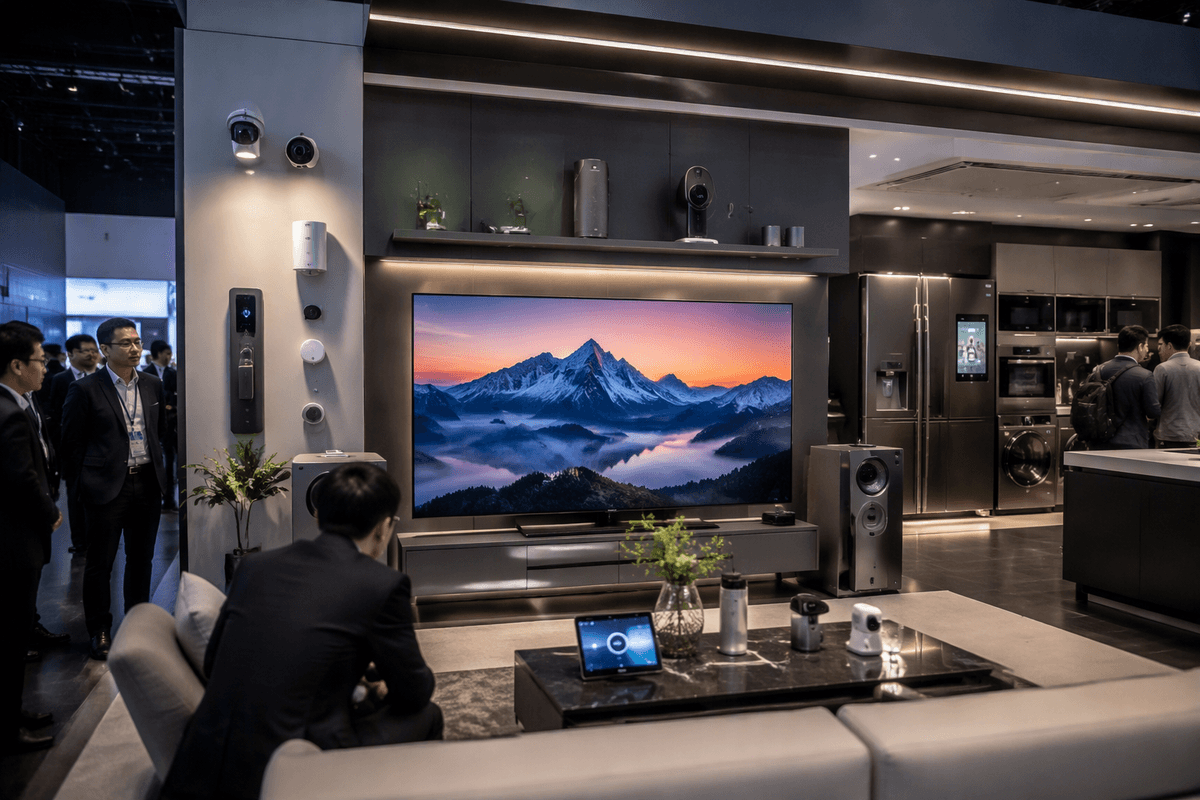
The confidence was easiest to see in the products themselves. Many Chinese exhibitors were not presenting a single clever gadget, but broader product families that worked together: a television linked to speakers, appliances, cameras, and software; an electric vehicle surrounded by charging, sensing, and entertainment features; a robot designed for homes, warehouses, or hotels rather than only for demonstrations. That breadth suggested companies were thinking about complete customer experiences, not just isolated hardware.
There was also less hesitation about moving into premium categories. Better materials, cleaner interfaces, stronger branding, and more polished demonstrations showed an effort to compete on design and reliability as well as price. Some of that presentation remains untested. A convincing booth cannot reveal long-term software support, repair networks, data practices, or whether overseas customers will trust an unfamiliar brand. International expansion can also be expensive, especially when products need local certifications, service teams, and distribution partners. Still, the underlying advantage is practical: firms that can iterate quickly at home can arrive at global events with products refined through real market pressure, not just ambitious presentations.
A Huge Home Market Changes the Risk
A company entering a foreign market does not always need immediate global success to justify an ambitious product. China’s domestic market can provide a large testing ground first, allowing firms to sell at scale, collect user feedback, improve manufacturing, and spread development costs across millions of customers. That changes the risk calculation. A device shown at CES may be seeking overseas buyers, but it may already rest on demand, revenue, and operating experience built at home.
The domestic market also exposes products to demanding competition. Chinese consumers can choose among many brands, often comparing price, features, delivery speed, and software integration in the same purchase. Companies that survive that pressure may develop useful advantages before they confront international rivals. They can refine products rapidly and learn which features people will actually pay for, rather than relying only on market research.
That foundation is not a guarantee of global acceptance. Domestic scale can hide weaknesses in customer support, branding, privacy compliance, or adaptation to local habits. Overseas expansion still requires costly distribution and service networks. But it gives Chinese companies more room to experiment than firms that must recover development costs in a smaller home market, making bold international moves easier to finance and repeat.
The Supply Chain Is Part of the Advantage
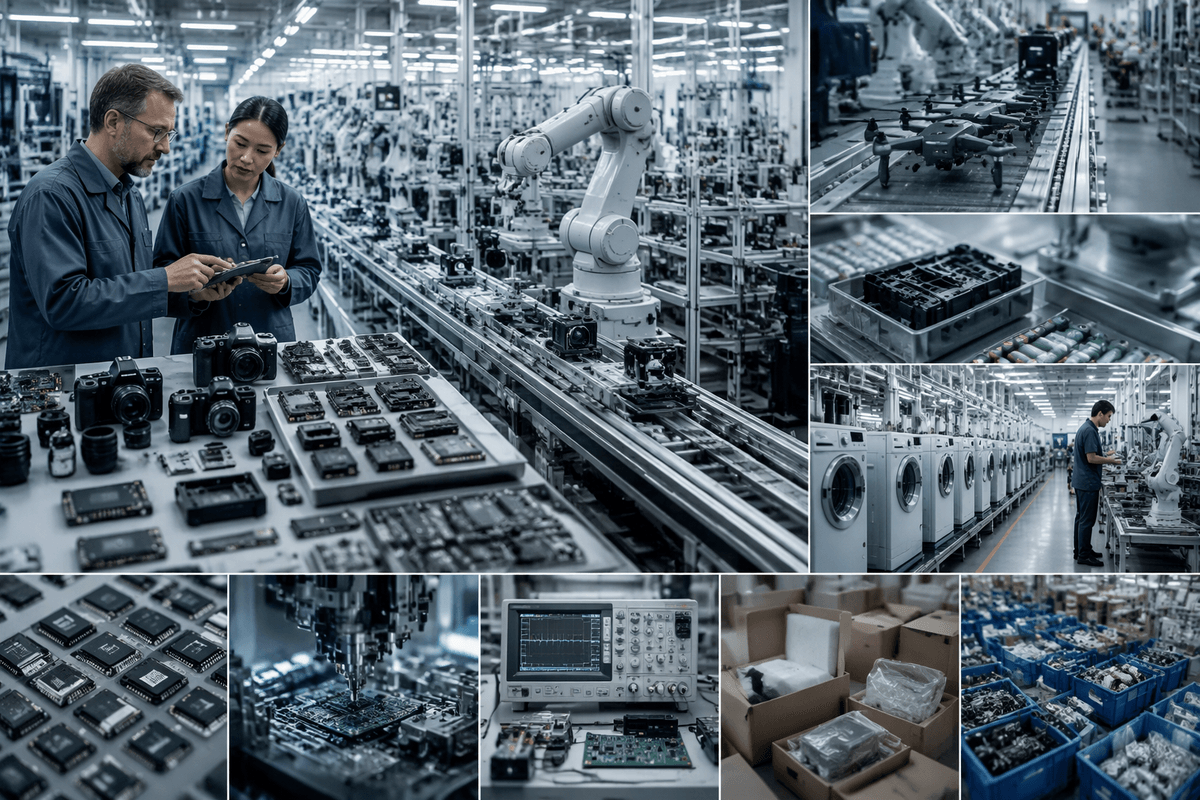
The advantage is not only that Chinese companies can sell at home; it is that many can reach suppliers, factories, and logistics providers within a relatively compact industrial ecosystem. A company developing a camera, battery system, drone, or smart appliance may be able to source components, test revisions, and adjust production without rebuilding its network from scratch. That shortens the distance between an idea and a product ready for customers.
This structure matters at CES because polished hardware often depends on hundreds of less visible decisions: chip availability, tooling, packaging, certification, firmware updates, and replacement parts. Dense supplier relationships can make small production changes faster and less expensive, especially when demand is uncertain. They also help companies offer more variations without creating entirely new manufacturing systems.
Concentrated supply chains can be disrupted by export controls, shipping problems, rising costs, or dependence on a few critical components. Overseas buyers may also demand local production and traceability. Even so, the ability to coordinate hardware at speed remains a substantial competitive asset, particularly in markets where product cycles are becoming shorter.
Global Restrictions Have Not Stopped Ambition
Restrictions on advanced chips, software, investment, and market access have made global expansion harder, but they have not removed the incentive to pursue it. In some cases, pressure has encouraged companies to redesign products around available components, develop more of their own technology, and seek customers in regions where political barriers are lower. A firm that cannot rely on unrestricted access to the newest processor may focus instead on efficient software, specialized hardware, or products that do not require leading-edge technology.
That adaptation can preserve momentum, but it also has clear costs. Substituting components may reduce performance, increase engineering time, or make products harder to support across different markets. Export controls can also limit partnerships and complicate access to research, talent, and financing. Global restrictions therefore do not prove that Chinese companies are unaffected; they show that ambition is being redirected. The companies appearing at CES are often competing not by waiting for conditions to improve, but by building around constraints and treating international presence itself as a strategic investment.
Optimism Still Has Limits and Tradeoffs
That adaptation can create momentum, but momentum is not the same as durable advantage. Companies may look confident at CES because they can launch quickly, price aggressively, and present a broad portfolio. Yet each move into a foreign market adds costs that domestic scale cannot remove. Products need local certifications, language support, privacy safeguards, financing, warranties, and technicians who can resolve problems after the sale. A lower price may attract attention, but it can also leave less room to fund those obligations.
Rapid product cycles help companies improve hardware, but overseas customers may hesitate if software support is uncertain or if political concerns affect data, security, or access to components. Brand recognition also develops more slowly than manufacturing capacity. A company can produce millions of devices and still struggle to persuade buyers, retailers, or governments that it will remain accountable for them. The optimism at CES is therefore credible as evidence of capability and willingness to compete, but less conclusive as evidence of global staying power. Its limits will become clearest after the booth closes, when products must earn repeat purchases and reliable service.
What CES Reveals About the Next Contest
The next contest will not be decided by which companies create the most impressive CES displays. It will be decided by whether they can turn manufacturing speed, domestic experience, and lower costs into dependable global businesses. That means winning over retailers, regulators, developers, and customers who may care as much about service and security as technical features. Chinese companies have shown they can enter this contest with serious products and enough scale to keep adapting.
For competitors, the lesson is equally practical. Price alone will not be a sufficient response. Established brands will need faster product cycles, stronger supply chains, and clearer reasons for customers to trust them. CES therefore revealed a contest shifting from access to capability: not simply who can build advanced technology, but who can support it, localize it, and earn confidence across markets.