Why Materials Discovery Still Takes So Long
A promising material rarely appears from a single clever idea. Researchers must choose a chemical composition, determine how its atoms should be arranged, and then test whether it can be made reliably. Small changes in temperature, pressure, impurities, or processing can produce a very different result. A material that looks excellent in a computer model may be unstable, expensive, toxic, or impossible to manufacture.
The search is also unusually large. The possible combinations of elements and structures number far beyond what a laboratory can test one by one, while each experiment may require specialized equipment and weeks of analysis. Researchers therefore rely on experience and established theories to narrow the options, but those methods can overlook unusual candidates. The central challenge is not simply finding a material with desirable properties; it is identifying one that also survives practical testing and fits real-world constraints.
Where AI Can Search Beyond Human Intuition
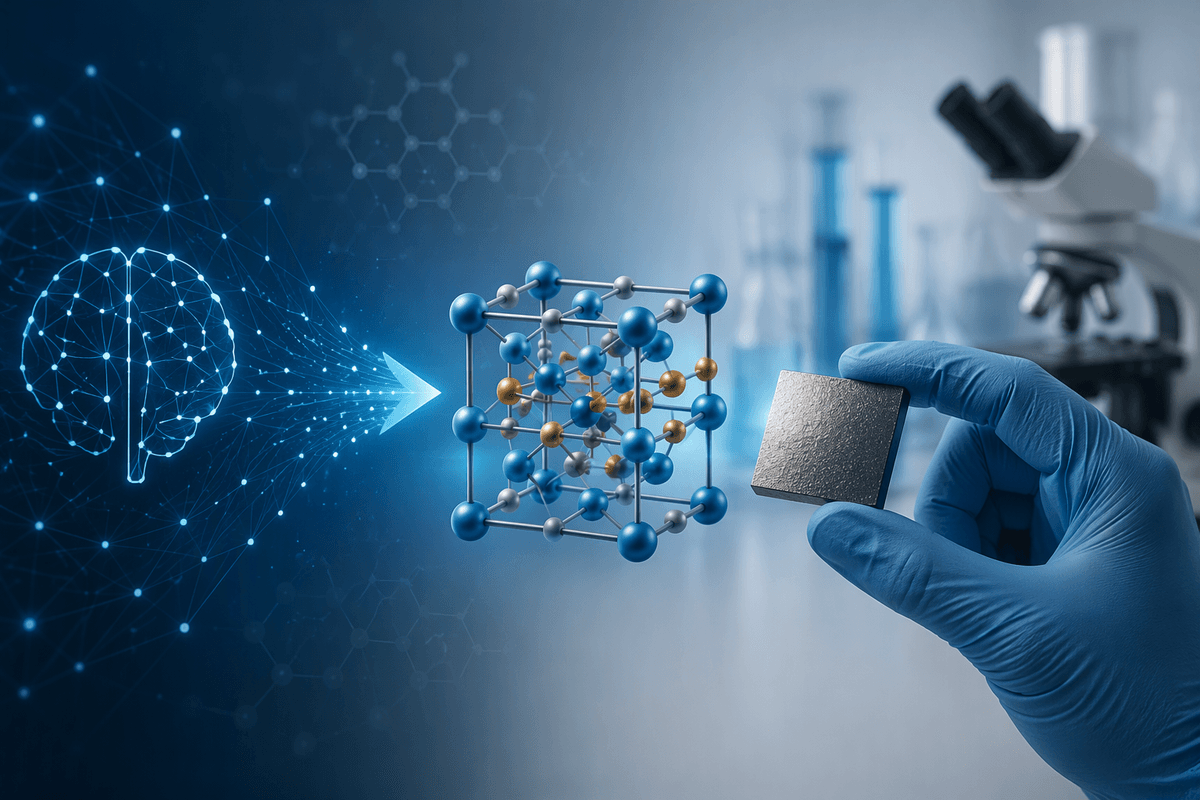
When researchers face millions of possible compositions, AI can help rank the options before anyone commits to an experiment. A model trained on existing measurements can estimate properties such as strength, conductivity, stability, or light absorption for materials that have never been tested. It can also compare combinations that seem unrelated from a human perspective, revealing patterns across large collections of chemical formulas, crystal structures, and processing conditions.
That ability is useful because AI does not have to follow the familiar categories researchers often use. It may identify a candidate by combining traits found in different material families, or suggest that a small change in composition could produce a valuable shift in performance. Some systems can search backward from a goal—such as a battery material that stores more energy without relying on scarce elements—and propose promising routes to investigate.
These predictions are not discoveries by themselves. They are estimates shaped by the data used to train the model, and unusual candidates may be the least reliable. AI can widen the search and prioritize experiments, but laboratories still must determine whether its suggestions can be made, measured, and used.
The Data Problem Behind the Promise
The quality of an AI prediction depends heavily on the evidence behind it. Materials databases are often uneven: some measurements are precise and repeated, while others come from different instruments, laboratories, or testing conditions. A model may treat these results as directly comparable when they are not. Missing data creates another problem. Well-studied materials are easier for AI to learn from, while rare, unstable, or newly proposed materials may have too few examples to support reliable predictions.
Researchers also have to decide what counts as a useful training example. A database may record a material’s conductivity but omit how it was processed, how long it remained stable, or whether it required an impractical ingredient. Those missing details can make a candidate look better on paper than it would in a factory or laboratory. More data can help, but collecting it is expensive and slow, especially when measurements require specialized equipment. AI therefore works best when its uncertainty is visible and when researchers deliberately gather new data to test weak points in the model, rather than treating every ranked result as equally trustworthy.
From Prediction to Material in the Lab
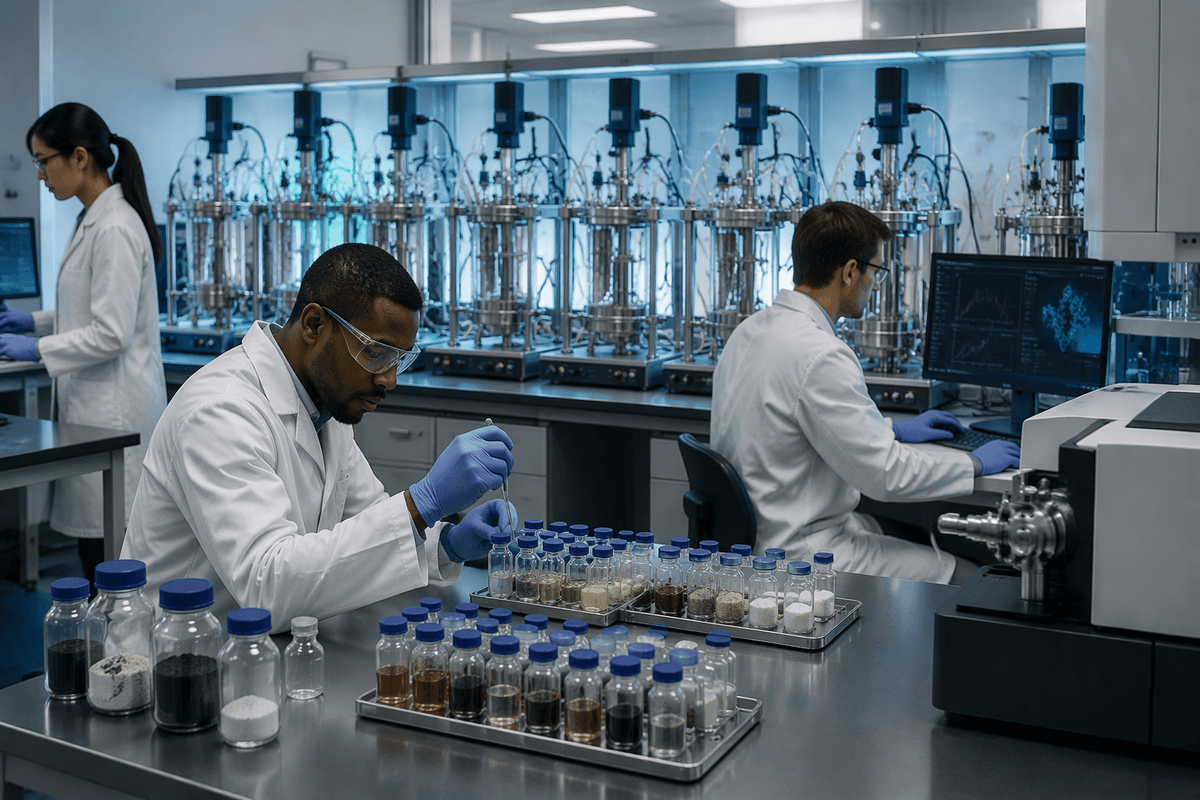
A promising prediction usually enters the laboratory as a short list, not a finished recipe. Researchers may first use simulations or small-scale synthesis to check whether the proposed structure can form at all. They then adjust factors such as heating rate, solvent, pressure, or cooling speed, because the same ingredients can produce different materials under different conditions. AI can help select which variables to test and suggest experiments that would provide the most useful information.
The practical test is whether the material can be made consistently and measured under realistic conditions. A sample might show impressive conductivity once but fail when produced again, or perform well in a controlled test while degrading in air. Laboratory results must therefore feed back into the model, allowing it to learn which assumptions were wrong and which processing details matter. This cycle can reduce wasted experiments, but it is not automatic. Synthesis still requires time, skilled researchers, costly equipment, and sometimes hazardous chemicals. AI makes the search more targeted; it does not remove the physical work needed to turn a candidate into a usable material.
What Researchers Gain—and What They Risk
For researchers, the clearest gain is not simply speed. AI can help them spend limited laboratory time on experiments with a stronger reason behind them, while exposing relationships that might otherwise remain buried in scattered data. It can also make exploration more systematic: instead of choosing the next test mainly from habit or intuition, a team can compare expected performance, uncertainty, cost, safety, and availability of ingredients.
That advantage comes with a risk of misplaced confidence. A highly ranked candidate may reflect gaps or biases in the training data rather than genuine promise, and a model can make its recommendation difficult to explain. Researchers may also overlook unconventional ideas if funding and attention follow the model’s preferred options too closely. The cost is not only a failed experiment; it can include months spent refining an unworkable material while more important questions go unexamined. AI is most useful when it supports judgment rather than replacing it, especially when teams treat surprising predictions as hypotheses to test and record failures as carefully as successes.
The Most Valuable Role May Be Collaboration
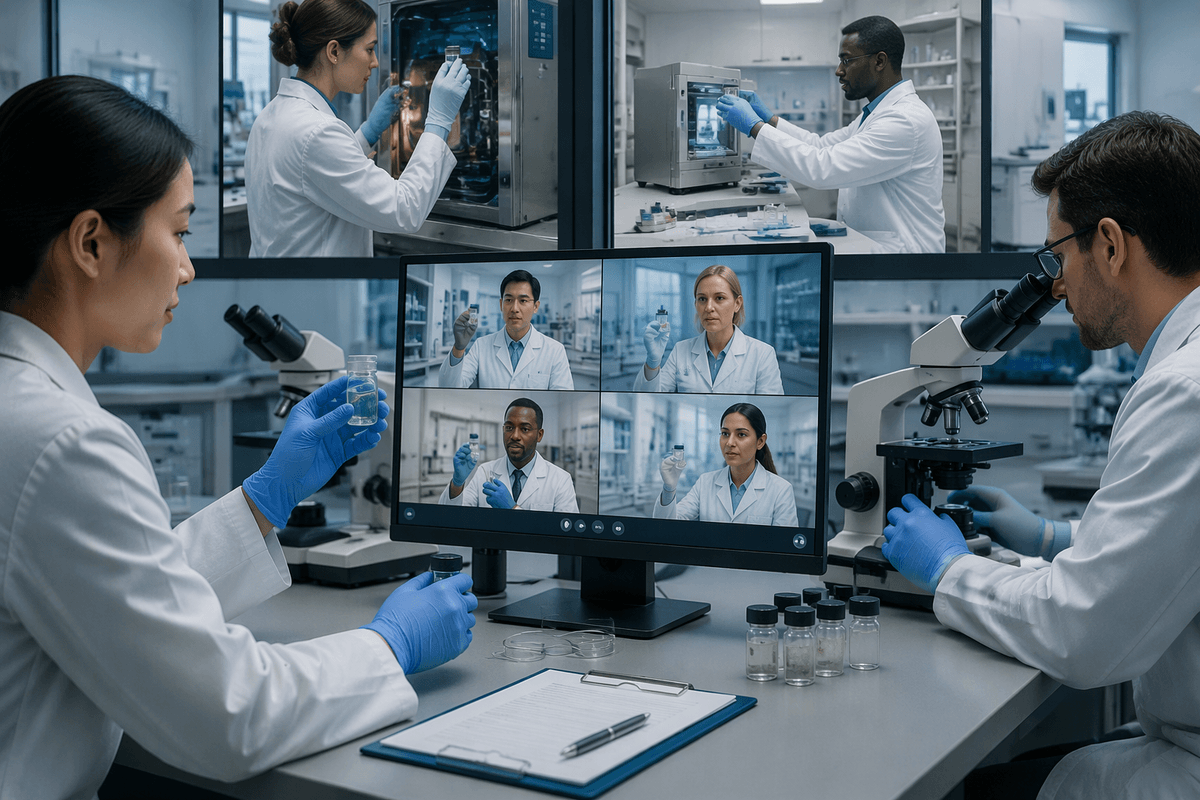
The strongest results may come when AI becomes part of a working relationship rather than a separate decision-maker. A materials scientist can identify which properties matter in practice, an AI system can search a broad design space, and a technician can recognize when a proposed synthesis is unrealistic. Each contributes knowledge the others lack. This division of labor also gives researchers a way to question the model’s assumptions instead of accepting its rankings at face value.
Collaboration matters across institutions as well. A model trained on data from one laboratory may perform poorly on samples prepared elsewhere, so shared standards, openly described methods, and carefully documented failures can make predictions more transferable. That cooperation takes time and may raise concerns about credit, intellectual property, or access to expensive equipment. Still, without it, teams may repeatedly solve the same measurement problems or build models from isolated, inconsistent evidence. AI can connect researchers to possibilities, but people must connect the predictions to reliable experiments, manufacturing needs, and decisions about which problems deserve attention.
A More Targeted Future for Materials Research
A more targeted future will not mean testing every possible material faster. It will mean choosing better questions: which property matters most, which ingredients are available, how much uncertainty is acceptable, and what evidence would change the next decision. AI can help connect those questions to promising candidates, highlight missing data, and recommend experiments that distinguish useful ideas from attractive but impractical ones.
This approach may produce fewer dramatic breakthroughs than broad promises suggest, but it can make progress more deliberate. The most valuable outcome could be a clearer path from a research goal to a material that can be made, tested, and improved. AI’s role is strongest when it narrows the search without narrowing human judgment.